


International vs National Driving Licenses — What’s the Difference?
National Driving License
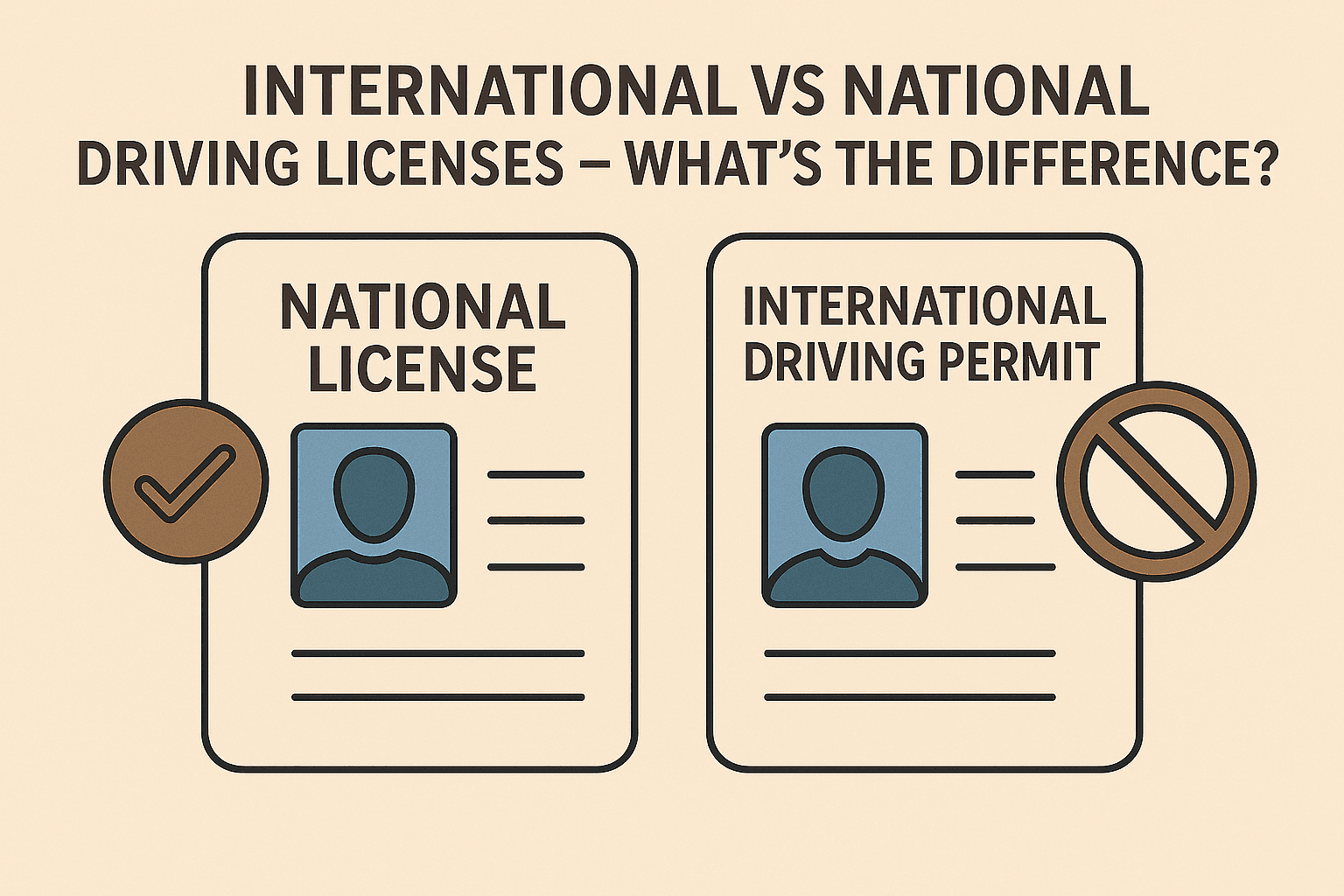
This is your regular license issued by your home country. It’s valid domestically and may be accepted abroad if agreements exist — but often not recognized without a translation, especially if it’s not in Latin script.
International Driving Permit (IDP)
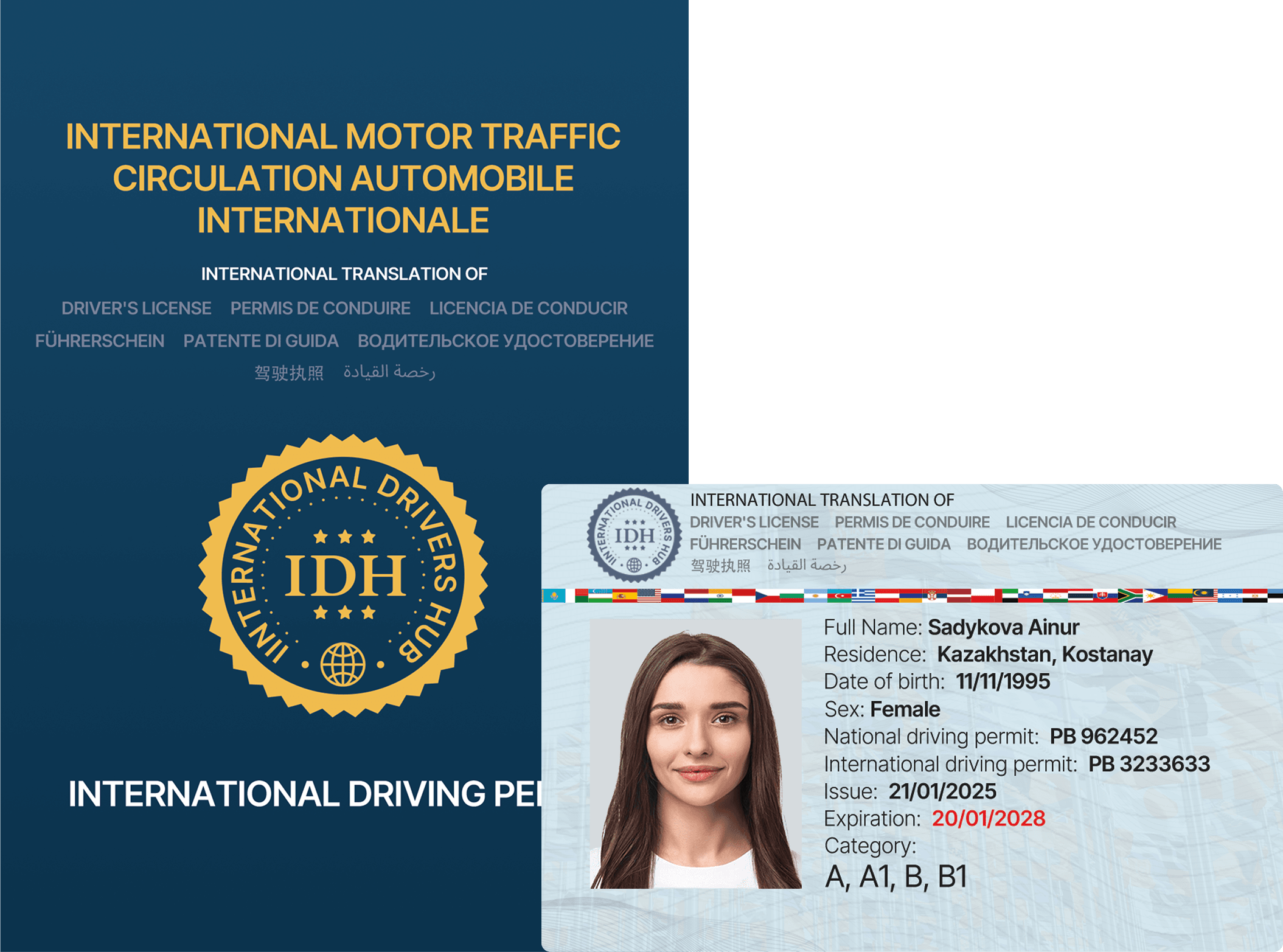
An IDP is an official translation of your national license into multiple languages. It’s based on your valid home license and proves your right to drive internationally. It’s not valid on its own without your original license.
When Is a National License Enough?
In some countries like the USA or Canada, tourists with English-language licenses are allowed to drive without an IDP. Still, rental companies may ask for it anyway.
When Is an IDP Mandatory?
Countries that signed the 1968 Vienna Convention recognize IDPs. In Japan, the UAE, South Korea, Italy, and others, IDPs are legally required. Without one, you can’t rent a car or prove your driving rights.
Bottom Line: Which One Do You Need?
If you’re not leaving your home country — your national license is enough. But for any international travel involving driving, the IDP is a smart and necessary choice.